- Revue : Journal of Data Mining and Digital Humanities
Résumé
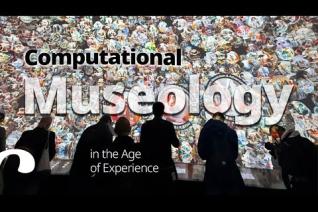
<div><p>Museums with vast, under-catalogued collections face significant challenges in documentation and accessibility [9]. In collaboration with the Musée des Arts Décoratifs (MAD) in Paris, the TORNE-H project carried out at École nationale des chartes explores the application of artificial intelligence and computer vision to enhance the cataloguing process, particularly focusing on the collection of the French designer Jean Royère. Computer vision techniques are leveraged in order to identify and annotate objects within Royère's extensive archive of 18,000 drawings, a crucial step for authentication and documentation purposes.</p><p>Using the YOLO object detection model[8], an iterative workflow was developed to annotate and refine AI-generated object identifications. To improve annotation efficiency and model accuracy, data augmentation techniques such as image deformation and segmentation were employed. Additionally, the study investigated the potential of CLIP for natural language-based image retrieval.</p><p>Future research aims to extend these methodologies to other collections within MAD, in particular the Henrot collection of 430.000 photographs, and to investigate more in-depth organizational workflows and the articulation of human-and machine-performed tasks. The broader implications of this work include reshaping museum cataloguing strategies, as well as enhancing accessibility to cultural heritage collections.</p></div>
Disciplines

Partager sur les réseaux sociaux
À découvrir
Découvrez d'autres productions de l'École sur les mêmes thématiques.
Humanités numériques
Whose Pen Wrote the Map? Battling Over the Armenian Medieval Text Ashkharhatsuyts with Stylometry
Publication de chercheur
Style in Eight Syllables: Metric Annotation and Stylometry of Chrétien de Troyes and Contemporaries
Publication de chercheur
The times are a-changin': présent vs passé simple in French novels (1811-2024)
Publication de chercheur